
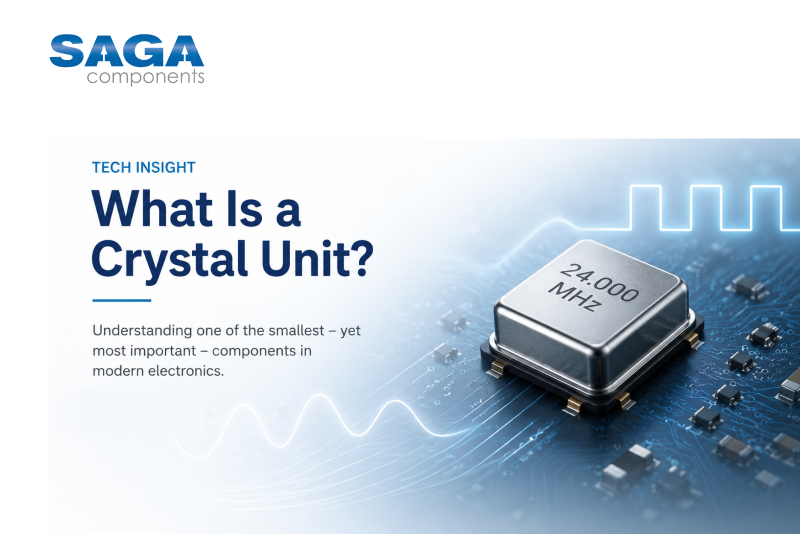
Every electronic system depends on one thing: accurate timing.
Whether controlling an industrial automation system, synchronizing wireless communication, or keeping time in a medical device, electronic circuits require an extremely precise reference signal. That reference is often provided by one of the smallest – yet most important – components on the PCB: the crystal unit.
At SAGA Components, frequency control technology has been part of our heritage for decades. Having originated from oscillator manufacturing, we understand that selecting the right timing solution is about far more than choosing a frequency. It is about ensuring long-term reliability, stability and performance.
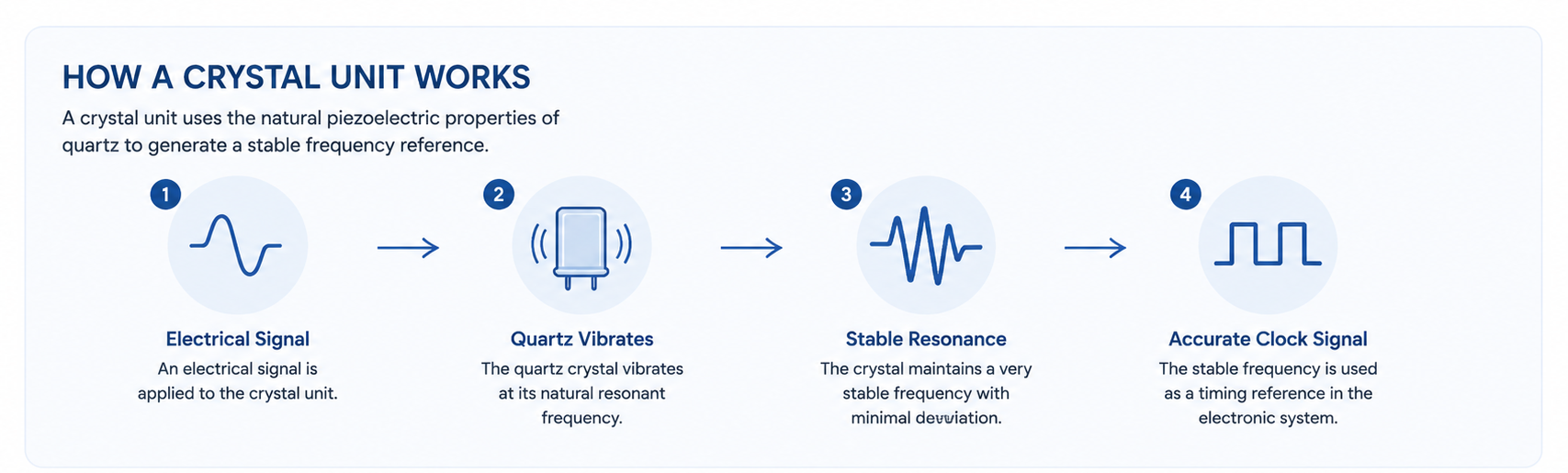
A crystal unit is a passive electronic component manufactured from quartz crystal.
Quartz possesses unique piezoelectric properties, allowing it to convert electrical energy into mechanical vibration and mechanical vibration back into electrical energy. When connected to an oscillator circuit, the crystal vibrates at a highly stable natural frequency, creating the precise clock signal that electronic circuits rely on.
You can think of it as the heartbeat of an electronic system. Without an accurate clock, processors, communication systems and digital electronics cannot operate correctly.
Quartz has remained the preferred material for frequency control for more than a century because it offers:
These characteristics make quartz-based timing solutions suitable for applications where dependable performance is essential.
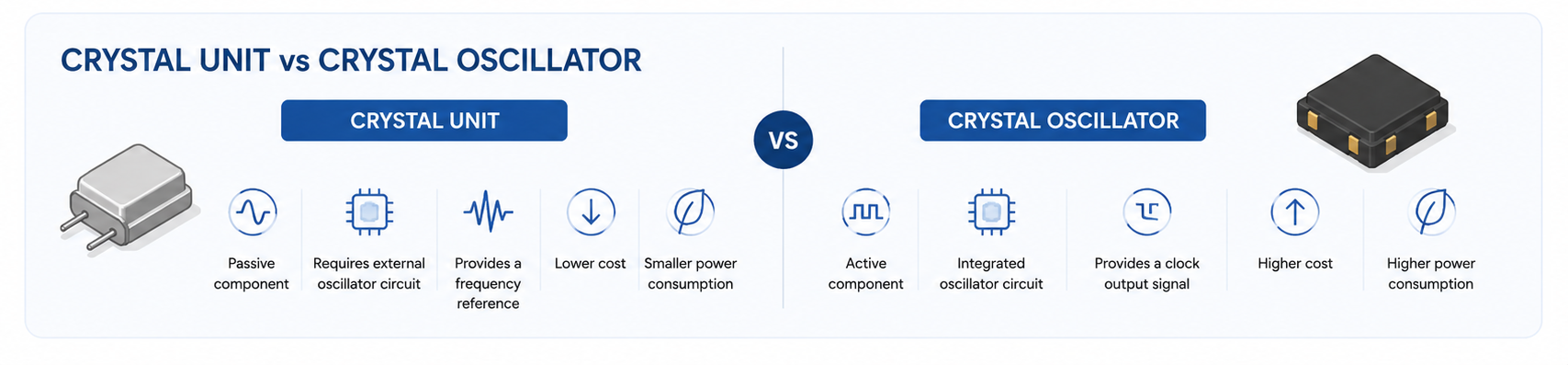
Although the names are often used interchangeably, they are not the same.
A crystal unit is a passive resonator that requires an external oscillator circuit.
A crystal oscillator integrates both the crystal and the oscillator electronics into a single package, delivering a ready-to-use clock signal directly to the application.
The best choice depends on the system requirements, available PCB space, power consumption and desired accuracy.
Crystal units and oscillators are used throughout modern electronics, including:
Wherever precise timing is required, frequency control technology plays a critical role.
Choosing a timing component involves much more than selecting the operating frequency.
Engineers also need to consider factors such as:
Selecting the appropriate solution early in the design process helps maximise system performance while reducing development risk.
At SAGA Components, we support customers throughout the Nordic region with frequency control solutions for industrial and high-reliability applications.
With decades of experience in timing technology and close cooperation with leading manufacturers, we help engineers identify the most suitable solution for each application—whether the requirement is accuracy, stability, low power consumption or long-term reliability.
If you are designing your next electronic product and would like guidance on selecting the right timing solution, our technical team is here to help.